Mati: The Silent Queen, and a Festival That Honours Those Who Serve Her
 କେଦାର ମିଶ୍ର Kedar Mishra
“Your wish is my action.” That, in the voice of the soil, is the poem’s first and last theology. Radhamohan Gadanayak, a poet of uncommon imaginative reach, wrote Mati as an ode to the earth and as an imagined conversation among the powers of nature before the supreme creator. The sun, the moon, the cloud and the wind each press a claim to supremacy. Mati asks for nothing. She only carries the creator’s wish forward. She is the silent queen of creation.
Gadanayak, whose meteoric poems still startle Odia literature, placed Mati in the collection Kavya Nayika. Thematically it remains one of the strongest poems in the contemporary Odia canon: not a pastoral compliment to landscape, but a moral argument. The soil endures everyone and everything placed upon her. She bears every creature and absorbs their violence. She nourishes even those who plunder her. She is the all-forgiving, all-encompassing mother; greater, the poem implies, than the gods who advertise their brilliance, because she is the element that actually makes and sustains life. Tolerance here is not weakness. It is cosmology.
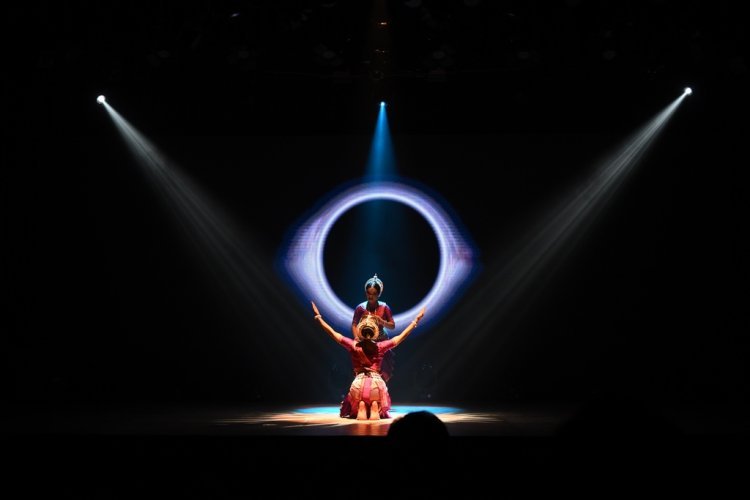
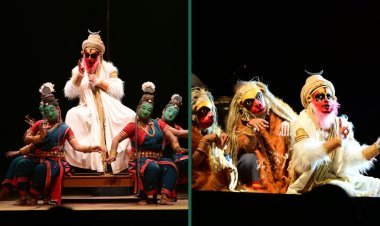
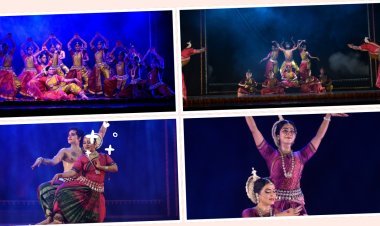
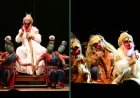
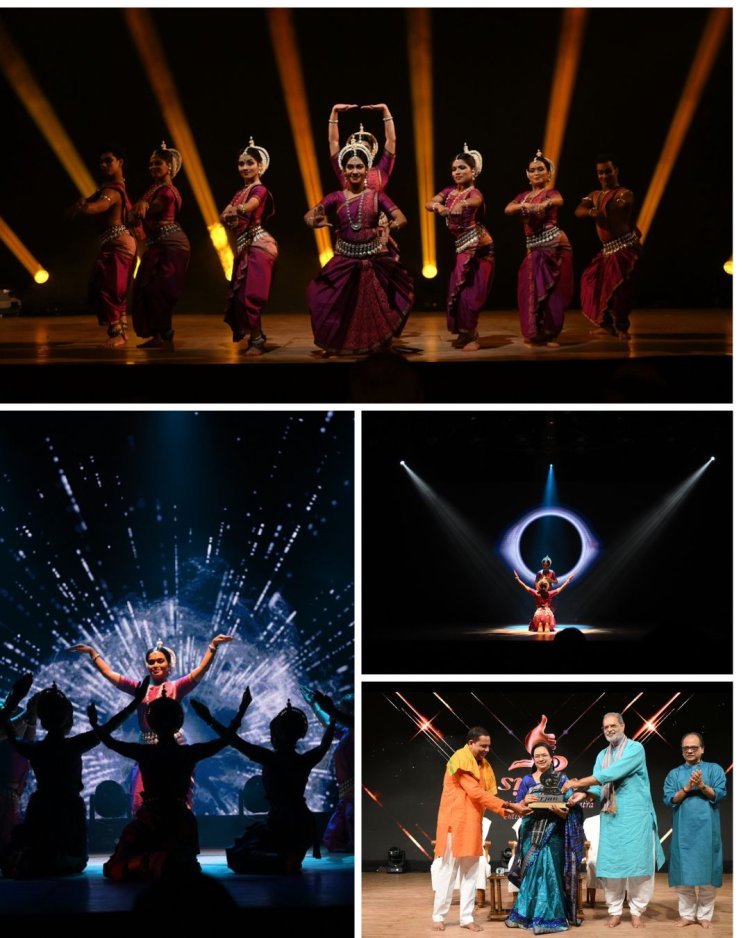
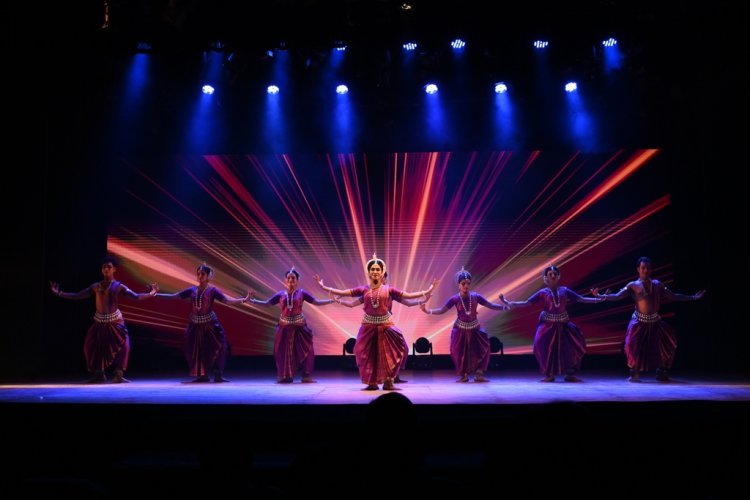
On the concluding evening of the 32nd Guru Kelucharan Mohapatra Award Festival at Rabindra Mandap, Guru Ratikant Mohapatra turned that argument into Odissi. The script was adapted by the late Jayadev Das — light designer, man of the historic Annapurna Theatre, and one of Odisha’s quiet prodigies of stage craft. Mohapatra built the choreography as a true group narrative. No dancer was permitted to become a solo star at the expense of the line. Each body had to remain visible; each had to shoulder the poetry as an equal. The result was a synchronised cosmic dialogue: creator and nature speaking through the grammar of Odissi — energetic, clean, and unusually democratic in its use of the ensemble.
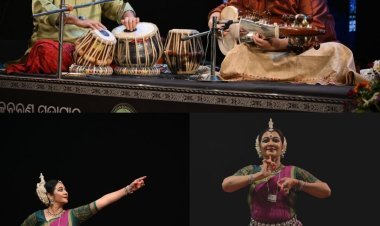
The Srjan dancers met that demand with discipline and a bright, unflagging energy. The production did not illustrate the poem so much as inhabit its ethics: stillness against display, bearing against boast. Lakshmikant Palit’s score held the architecture together; his own singing, entering mid-work for a few lines, became the emotional hinge of the evening — a human voice suddenly inside the earth’s patience. Debiprasad Mishra’s lighting was dazzling without vanity, evocative without clutter, and it gave the production a grandeur the poem itself never shouts for.
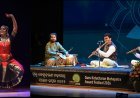
Before and around that premiere, the festival performed its other annual rite: the naming of those who have spent a life in service of the arts. The Guru Kelucharan Mohapatra Award 2026, carrying Rs. 1,00,000 and a citation, was conferred on four stalwarts across disciplines — Guru Sharon Lowen for dance, Guru Keshab Chandra Rout for music, Shri Dhirendranath Mallick for theatre, and Smt. Mahasweta Ray for cinema. Their reflection speeches, brief and unguarded, gave the audience something rarer than ceremony: the sound of long labour recognising itself.
In its second year, the Guru Kelucharan Mohapatra Kala Samman — instituted by Guru Ratikant Mohapatra in 2025 for established performing artistes between forty and fifty-five, and carrying Rs. 50,000 and a citation — went to Shri Agnimitra Behera for violin and Dr. Nazia Alam for vocal music.
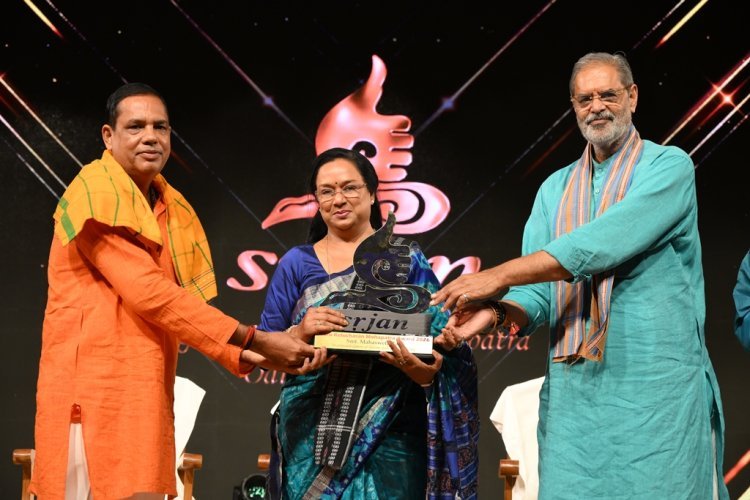
The Guru Kelucharan Mohapatra Yuva Pratibha Samman 2026, for artistes under forty, carrying Rs. 25,000 and a citation, was awarded to Sushree Vrinda Chadha and Sushree Aishwariya Singhdev for Odissi dance, Dr. Nikita Banawalikar for Kathak, and Shri Soumya Ranjan Nayak for Odissi music (mardala).
A festival named for Kelucharan Mohapatra, in the year of his birth centenary, could have ended in monument and marble. It ended instead with Mati: a poem that refuses spectacle, a choreography that refuses hierarchy, and a stage full of dancers who agreed, for one night, to be as the soil is — present, load-bearing, and greater than the gods who only shine.