Gandhis with a Laptop
 କେଦାର ମିଶ୍ର Kedar Mishra
By Kedar Mishra
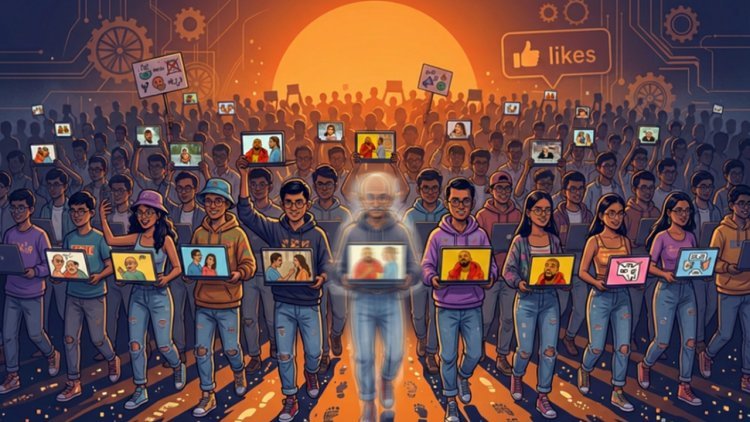
In an era defined by smartphones, viral memes, and relentless digital scrutiny, a new face of resistance has emerged in India—one that carries the moral force of Mahatma Gandhi but wields the tools of the 21st century. They are the “Gandhis with a Laptop”: a generation of young men and women who are agitated yet remarkably composed, bruised by power yet unbroken in spirit. Insulted, baton-charged, and water-cannoned, they respond not with despair but with sharper wit, stronger resolve, and an irrepressible smile.
This generation is extraordinary in its contradictions. They are funny and fiercely creative, blending satire with seriousness. Their protest playlists mix revolutionary slogans with stand-up comedy roasts of those in power. They turn police barricades into stages for street theatre and courtroom arguments into viral threads. Where earlier movements relied on grand symbolism, today’s youth choreograph dissent with hashtags, live streams, legal notices, and data-driven exposés. They read history, recite poetry, and build movements not through hierarchical party structures but through decentralized networks of conscience.
Our own generation, by contrast, often appears lazy, timid, and self-defeating in hindsight. We outsourced our politics to parties that specialized in paid rallies and booth management. For many of us, “doing politics” meant nothing more than casting a vote every five years and then retreating into private cynicism. We accepted the narrative fed by a pliant media and feared the consequences of confronting authority. We were the generation that believed democracy was a spectator sport.
This new cohort sees politics for what it truly is: a daily, all-encompassing contest over truth, dignity, and power. They have redefined it as something larger than elections—something that happens in universities, on streets, in courtrooms, and across timelines. They have little patience for the “Godi media” that once shaped public discourse unchallenged. Instead of arguing with biased anchors, they simply bypass them. A single well-edited reel or fact-check thread can reach millions and render hours of primetime propaganda irrelevant. Where we consumed narrative, they create counter-narratives—often with devastating humor.
Perhaps most striking is their courage in the face of state power. Our generation largely viewed policemen as figures to be feared or avoided. These young Gandhis engage them with questions of law and Constitution. They document every lathi charge, file FIRs against those who break the law while wearing uniforms, and dance under water cannons as an act of defiance. Their non-violence is not passive; it is strategic, informed, and relentless. They understand that the moral high ground, when amplified by technology, becomes a powerful weapon.
In many ways, this generation has resurrected the spirit of the grand old man of Indian politics—Mahatma Gandhi—but dressed him in jeans, sneakers, and a laptop bag. Like Gandhi, they prioritize satyagraha (insistence on truth) over spectacle. Like him, they endure suffering with dignity. But unlike the Mahatma’s time, their message travels at the speed of light. A student beaten in one city becomes a symbol known across the country within minutes. An unjust law is dissected not just by veteran lawyers but by thousands of young researchers armed with open-source data and RTI filings.
This is not a flawless generation. They can be impulsive, fragmented, and occasionally naïve about the complexities of governance. Yet their energy, creativity, and refusal to accept humiliation as destiny mark a profound shift. They have reminded an entire nation that citizenship is not a periodic duty but a continuous practice.
The Gandhis with laptops are not waiting for a leader to emerge. They are becoming the leaders—diffused, leaderless in the traditional sense, yet bound by shared values. In their laughter amid repression, in their memes laced with constitutional wisdom, and in their stubborn optimism, they carry forward the most enduring lesson of the freedom struggle: no authority is absolute when people refuse to bow
India’s future, it seems, is in good hands—fingers flying across keyboards, eyes fixed on justice, and hearts beating to the rhythm of an old dream dressed in new clothes.
(Kedar Mishra is a poet, political commentator, art critic, scholar, and digital content creator. He is the founding editor of The Samata (thesamata.in) and the YouTube channel The Samata – ସମତା, where he hosts regular live discussions and analysis, primarily in Odia.)