Reworking Dasavatara in Odissi: A Triumph of Vision at Naman Festival 2026
 କେଦାର ମିଶ୍ର Kedar Mishra
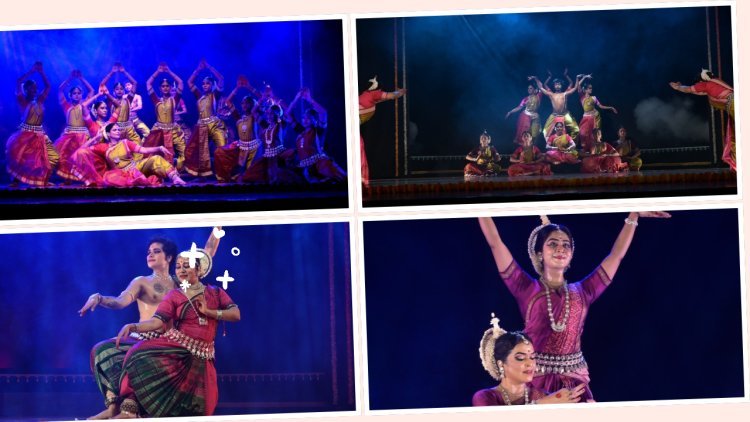
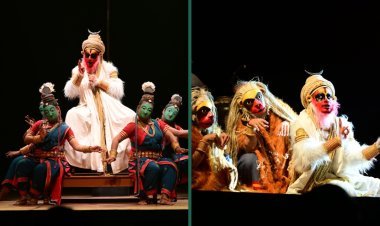
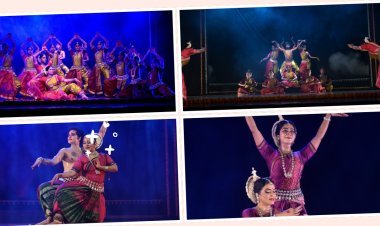
At its core, it was Jayadeva’s celebrated hymn from the Gita Govinda, yet what unfolded on stage transcended the boundaries of traditional stagecraft. In the classical Odissi repertoire, Dasavatara is conventionally mounted as a concise Mangalacharana—a reverent, ritualistic invocatory piece.
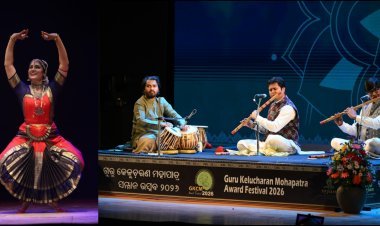
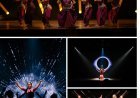
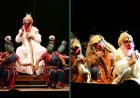
At the 15th edition of the Naman Festival hosted at ADA Rangamandir, Bengaluru, dancer and choreographer Madhulita Mohapatra radically subverted this brief format. She elevated the lyrical masterwork into an expansive, hour-long dance-theatre spectacle. The resulting performance proved to be an ambitious reimagining, interweaving dramatic intensity, folk vitality, musical storytelling, philosophical inquiry, and a striking contemporary visual design.
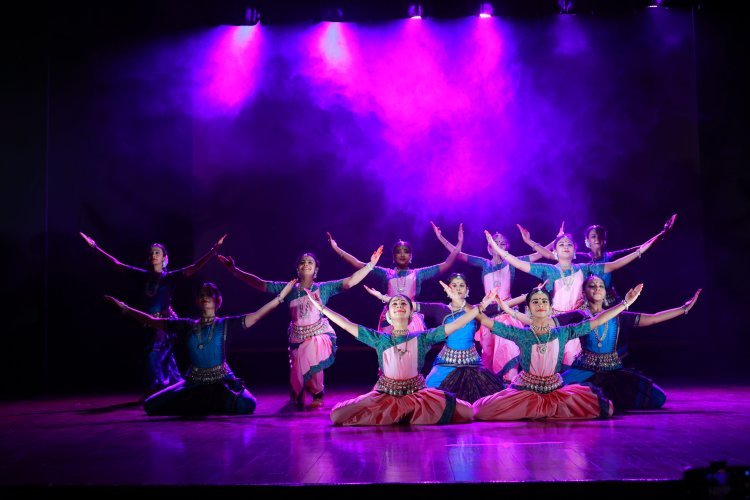
The primary choreographic challenge of tackling an omnipresent theme like the ten incarnations lies in predictability. When an audience has witnessed the iconography rendered countless times, thematic familiarity often dampens dramatic impact. Mohapatra overcame this hazard through sheer creative daring. Sidestepping a mundane episodic retelling, her ensemble, Nrityantar, crafted an experience characterized by swift narrative transitions and compelling dramatic abstraction.
The production anchored itself from the outset in the living folk traditions of Odisha, grounding the cosmic epic through the rhythmic, vernacular cadences of Daskathia. This rustic balladeer framework gave the piece an immediate, earthy pulse before it unfolded into an intricate classical matrix. Crucial to this transformation was young music composer Rupak Kumar Parida and veteran rhythm maestro Guru Dhaneswar Swain whose evocative score supplied the dynamic melodic architecture and theatrical thrust required to support Mohapatra’s panoramic staging. The ensemble moved with disciplined cohesion, rendering the hour-long production kinetic, nuanced, and conceptually revitalizing.
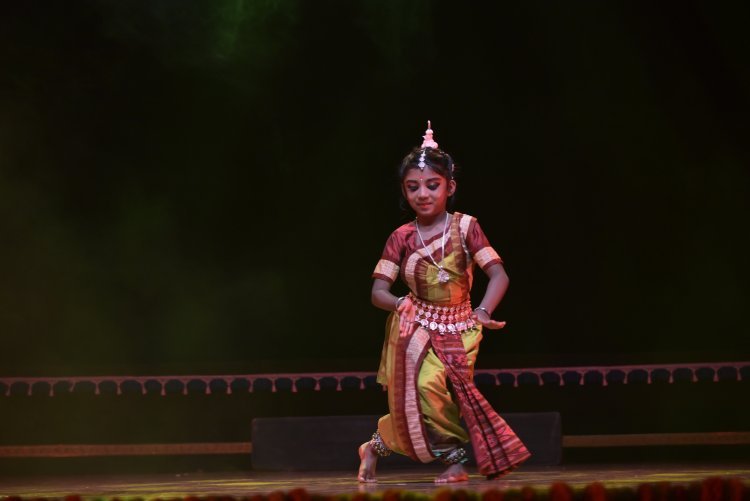
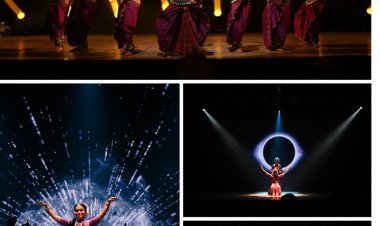
The evening then transitioned from the kinetic density of the ensemble work to the architectural poise of duet performances. Dancers Rajashree Praharaj and Pritisha Mohapatra took the stage to present Yugma-Dwandwa Pallavi, paired with a devotional invocation to Lord Rama. Renowned as a technical benchmark for rhythmic dialogue and intricate counterpoint, Yugma-Dwandwa Pallavi requires absolute precision. Praharaj and Mohapatra met the demand with poise, balancing crisp, articulate footwork with the soft, serpentine torso bends (bhangas) quintessential to the Guru Kelucharan Mohapatra gharana. Their shared synchronization laid bare the geometric beauty and innate lyricism of the piece.
The festival reached its formal culmination with another duet, presented by seasoned exponents Leena Mohanty and Debashis Patnaik. Opening with the demanding rhythmic cycles of Madhyamadi Pallavi, the duo demonstrated seasoned composure, weaving complex metrical patterns before plunging into the emotive, devotional fervor of Jago Maheswara. The performance offered a fitting finale, underscoring both the boundless narrative horizons of contemporary Odissi choreography and the bedrock purity of its classical idiom.

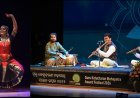
Beyond the mainstage performances, the 15th Naman Festival functioned as a multifaceted cultural confluence, highlighting institutional vitality and scholarly engagement. As a curtain-raiser on the evening of September 26, dozens of Madhulita Mohapatra’s students took the stage in a series of polished solo ,duet and group recitals. This student showcase demonstrated Nrityantar’s pedagogical rigour, proving that an institution located hundreds of miles outside Odisha can cultivate a vibrant, authentic hub for classical Odissi with its own distinctive artistic signature.
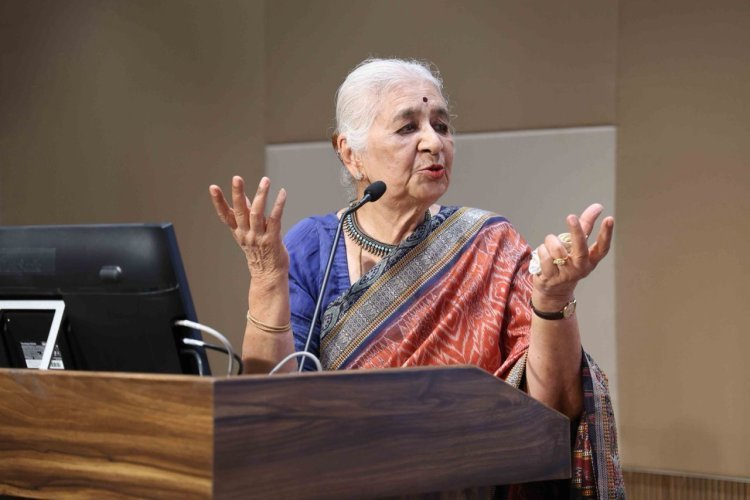
Intellectual discourse was equally integral to this landmark edition. On September 27, an in-house colloquium brought Nrityantar’s dancers into dialogue with eminent dance critics and scholars, including Leela Venkataraman, Tapati Chowdhurie, V. Kaladharan, Shyamhari Chakra, and Kedar Mishra. Extending this dialogue to academia, the festival partnered with the Department of Liberal Arts at Presidency University, Bengaluru, on September 28. The university symposium brought together scholars, university students, and practitioners for a sustained examination of aesthetics, pedagogy, and the evolving socio-cultural canvas of classical Indian dance.
The University colloquium featured a discourse with previous speakers with added presentations of Ashish Mohan Khokar, Kiran Prakash, Choodamani Nandagopal, Romal Singh and Pritha Sanyal. Aranyani Bhargav moderated the discussion, while Anjali Raj Urs served as the anchor for both the colloquium and the broader festival.