Sailing through the Ecstasy of the Sarod and the Odissi
 କେଦାର ମିଶ୍ର Kedar Mishra
Sailing through the rises and falls of musical notes last evening, I had the odd, vivid sensation of playing Ludo. One climbed ladders on the high notes, then slipped, almost at once, back to the lower ones—with a maverick playfulness that never quite announced itself. The sarod’s strings swung the listener’s heart to an extreme height and then, just as suddenly, to an extreme below, and they did so through an extraordinary silence. In the end, music is nothing but the art of striking the right chord closer and closer to absolute quiet.
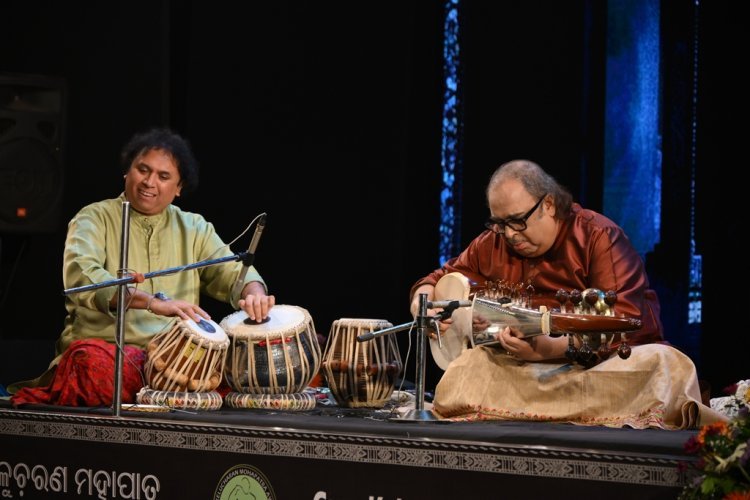
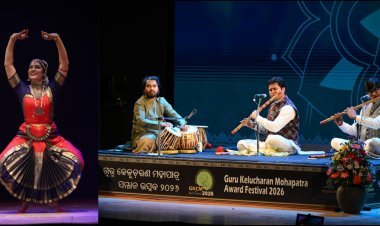
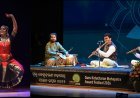
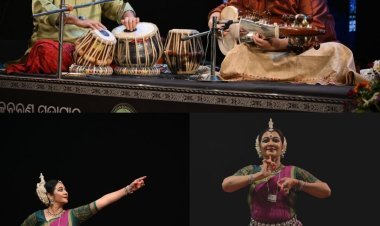
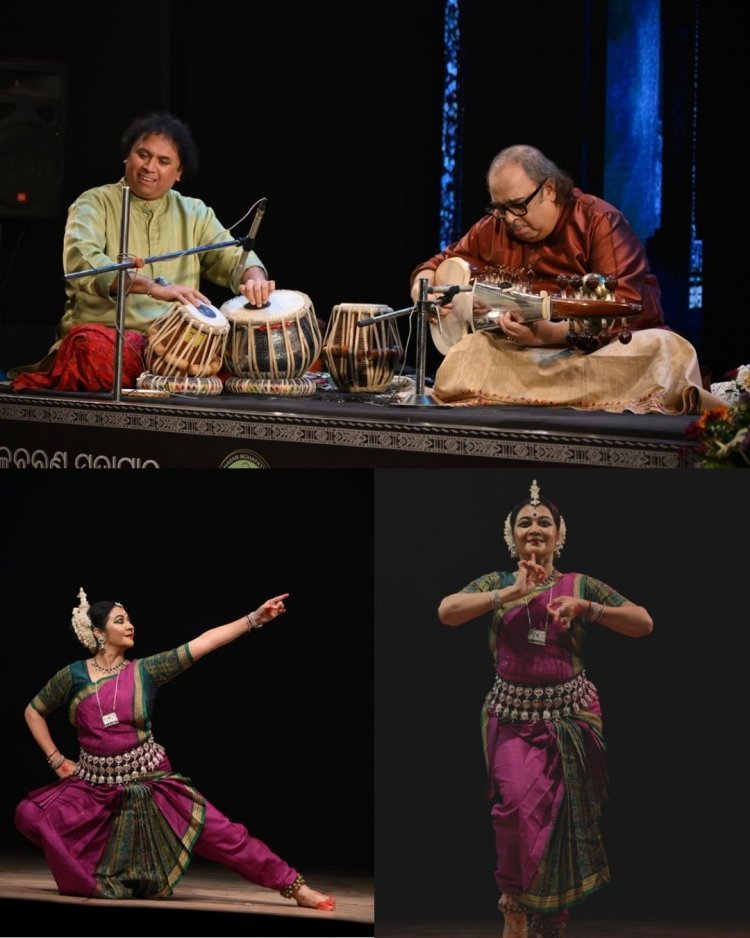
Watching Pandit Tejendra Narayan Majumdar’s sarod recital on the second evening of the 32nd Guru Kelucharan Mohapatra Award Festival at Rabindra Mandap was precisely this feeling of swing and silence. His Shuddha Kalyan—an evening raga of devotion and inner stillness—was full of surprises, brilliantly woven through aalap, jod and jhala. He entered the raga through a Dhrupadiya aalap, the signature of the Senia Maihar Gharana, and the hall seemed to settle into a kind of quietude. Dusk outside, and inside, a measured architecture of sound.
Pandit Majumdar’s playing is absolutely cool. Again and again he takes you to a greater height; and just when you have the sense of elevation, he pulls you down to a level of almost absolute silence. It was a full flow of ecstatic notes, never hurried, never merely ornamental. Adding magic to that musical current was Pandit Satyajit Talwalkar on tabla—vibrant, precise, and in deep conversation with the sarod rather than in competition with it. For a long stretch it felt like superb music unfolding inside one single raga: one world, many weather systems.

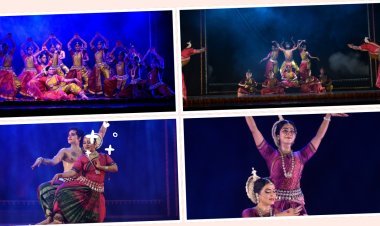
The evening concluded with a full course of Odissi by Lipsa Satpathy, a protégé of Odisha Dance Academy, whose gift is the blending of grace with a deeper, unforced expression. She offered an invocation to the five elements—Pancha Bhuta—and the abhinaya Kahibaku Laja, both composed by Guru Aruna Mohanty, and Deva Gandhari Pallavi, a composition of Guru Bichitrananda Swain. In Pancha Bhuta the body became earth, water, fire, air and sky without strain; in the pallavi she was lucid and lyrical, the footwork clean, the torso speaking in long, unhurried sentences. Kahibaku Laja asked for shyness and afterglow rather than display, and she gave it that tenderness.
Between the sarod’s plunge into silence and Odissi’s measured lyricism, the evening did what this festival at its best always does: it let two classical languages speak in turn, and left the listener a little higher, and a little quieter, than before.